
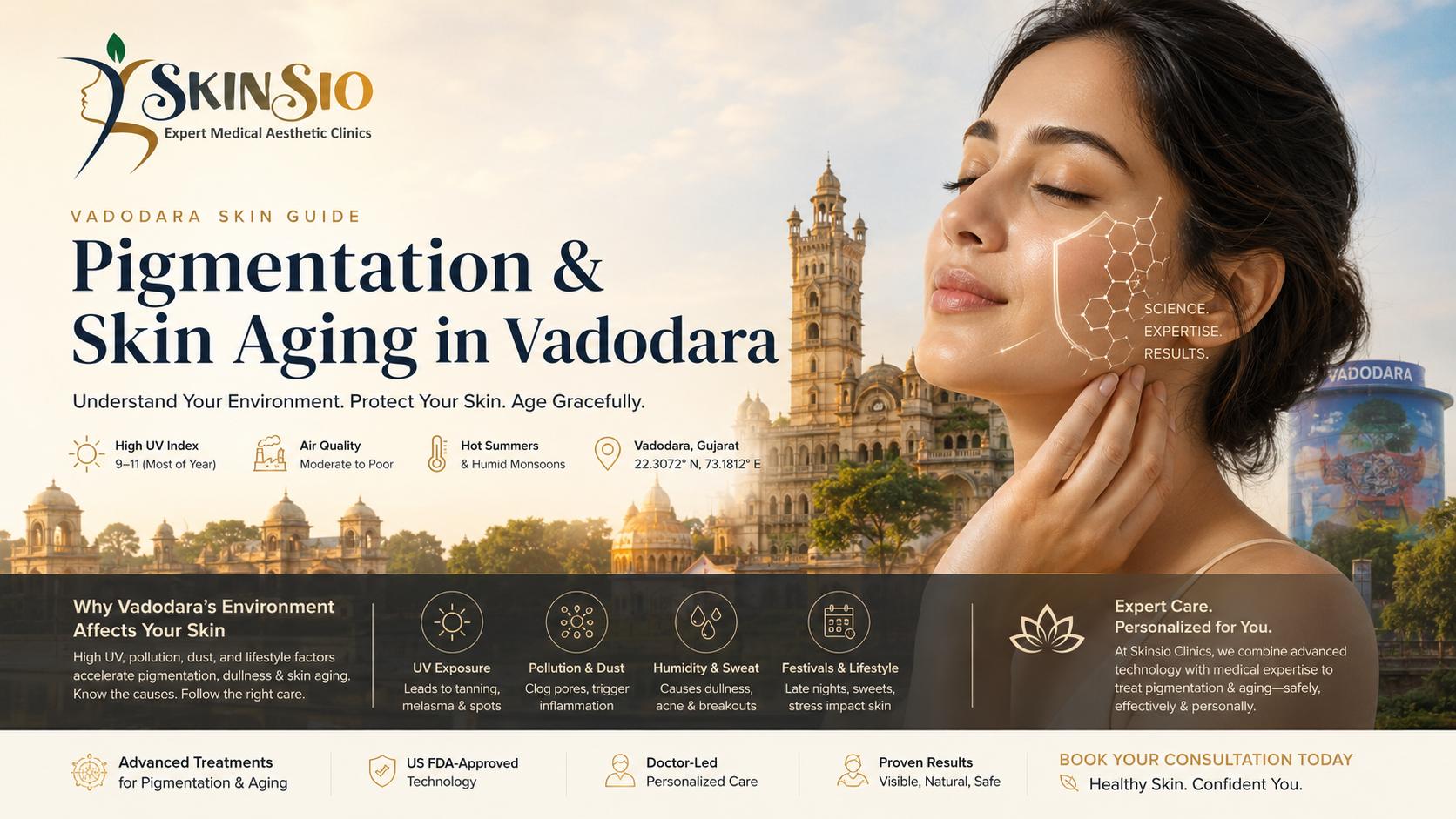
Vadodara's Skin Problem Nobody Talks About
Ask most people in Vadodara what's ageing their skin, and they'll point to "getting older." Few think about the invisible daily assault their skin survives just by stepping outside — intense UV radiation, seasonal smog, and a festival calendar that, however joyful, comes with real skin consequences.
Vadodara sits at roughly 22.3°N, 73.2°E in central Gujarat, giving it a tropical climate with brutally hot, dry summers from April to June, when temperatures regularly climb to 45–46°C, followed by a heavy monsoon from July to September and mild winters from December to February. The city sits only about 35 metres above sea level and, while it ranks among India's comparatively cleaner cities for air quality, it still sees real seasonal pollution spikes. The result: residents live with near-constant high UV exposure and periodic surges in particulate pollution from traffic, industry, and agricultural burning — a combination dermatologists increasingly call "photo-pollution."
At SkinSio Clinics, Vadodara, we see the effects of this every week: sunspots, melasma, dull uneven tone, and early fine lines showing up in patients well before they'd expect them. The good news is that almost all of it is preventable, and much of it is treatable.
The Double Hit: UV Rays and Pollution Working Together
Skin ageing has two drivers — intrinsic ageing, which is genetic and hormonal and generally begins in your 50s, and extrinsic ageing, caused by the environment around you: sun, pollution, and lifestyle. In Vadodara, extrinsic ageing arrives early because the environmental triggers are so persistent.
| Factor | What It Does to Skin | Peak Risk Period in Vadodara |
|---|---|---|
| UV Radiation | Direct DNA damage, melanin overproduction (sunspots), breakdown of collagen scaffolding | April–June (summer peak) |
| Particulate Pollution (PM2.5) | Generates reactive oxygen species, degrades collagen and elastin, thickens outer skin layer | Winter mornings, crop-burning season |
| Humidity Swings | Clogged pores, aggravated acne and fungal issues | Monsoon (July–September, ~74% RH) |
| Combined "Photo-Pollution" | Compounded oxidative stress, faster visible ageing than either factor alone | Year-round, worst in summer |
Studies consistently link high particulate matter exposure with over 20% more facial pigment spots and premature wrinkling in exposed skin. Pollutants — fine particulate matter, ozone, nitrogen dioxide and polyaromatic hydrocarbons — penetrate the skin and generate reactive oxygen species that trigger inflammation, degrade collagen and elastin fibres, thicken the skin's outer layer, and accelerate what dermatologists call solar elastosis, the classic aging change seen in sun-damaged skin. UV radiation works through a related but distinct mechanism, causing direct DNA damage in skin cells and pushing melanin production into overdrive, which is what shows up as sunspots and uneven tone.
Pollution also activates a specific pathway in skin cells called the aryl hydrocarbon receptor, which further ramps up pigment production — meaning polluted air doesn't just dull your skin, it can directly darken it. The net effect of UV, pollution, diet and stress together is often described as the skin's total "exposome," and for Vadodara residents it shows up most visibly on the forehead, cheeks and hands — the areas that see the most daily sun exposure.
Your Festival Calendar Is Also Your Skin Calendar
Vadodara's social and festival life is one of its best features — but a few key events come with skin risks worth planning around.
- Makar Sankranti / Kite Festival (mid-January): Hours spent flying kites under direct winter sun means intense, often unprotected UV exposure on the face, neck and hands. SkinSio tip: apply broad-spectrum SPF 30+ before you head out, and wear a hat or scarf — winter sun is deceptively strong.
- Navratri Garba (October): Nine nights of energetic dancing, heavy makeup, and heat. Sweat mixed with makeup can clog pores and trigger breakouts. SkinSio tip: remove makeup thoroughly and shower as soon as you get home, and stick to a gentle, non-comedogenic cleanser through the festival.
- Diwali (October/November): Fireworks fill the air with smoke and fine ash, causing a short but sharp spike in air pollution that settles directly on the skin. Sweets, late nights and smoke add further systemic stress. SkinSio tip: follow up with a thorough oil-based cleanse and a vitamin C serum to counter the free-radical load.
- Summer Weddings and Outdoor Events: Outdoor ceremonies under peak-intensity sun. SkinSio tip: schedule outdoor photography for early morning or evening where possible, and reapply sunscreen every 2–3 hours throughout the event.
Beyond festivals, everyday life in Vadodara adds up too — outdoor work, market visits, commuting, and indoor smoke from incense or tobacco all chip away at the skin barrier over time. Diet plays a role as well: Gujarat's flavourful, often spice-forward cuisine can increase internal inflammation, while research shows diets rich in antioxidants — fruit, vegetables, and fish oil — genuinely help protect skin. On the flip side, high sugar and heavily processed food intake promotes advanced glycation end-products, compounds that stiffen collagen and deepen wrinkles from the inside out.
How to Tell If Your Skin Is Already Under Attack
Extrinsic ageing and pigmentation rarely appear overnight — they build quietly. Watch for:
- Flat brown spots appearing on the cheeks, forehead, or backs of the hands (sunspots)
- Symmetrical brown patches across the cheeks or upper lip, often worsening with heat or sun (melasma)
- Dark marks lingering long after a pimple has healed (post-inflammatory hyperpigmentation)
- Skin that looks dull or uneven despite a regular skincare routine
- Fine lines or early loss of firmness appearing in your 20s or 30s, well before you'd expect them
Hormonal shifts — pregnancy, menopause, certain medications — can also trigger or worsen pigmentation, as can inflammation from conditions like acne or eczema, which is especially common on Indian skin. None of this means something is "wrong" with your skin; it means your skin's environment is working against it, and it's worth addressing directly rather than waiting it out.
A Daily Defense Routine Built for Vadodara's Climate
Dermatologists agree that a consistent daily routine matters more than any single "miracle" product. Here's what actually holds up against Vadodara's specific conditions:
- Broad-spectrum sunscreen, non-negotiably: SPF 30 or higher, applied generously every morning and reapplied every 2–3 hours outdoors or after sweating. This single step blocks the UV radiation responsible for most pigment and wrinkle formation — yes, even on cloudy days, and even while flying kites in January.
- Physical protection: Wide-brim hats, sunglasses, and UPF-rated clothing meaningfully cut UV exposure during outdoor work, weddings, or festivals. Shade and umbrellas help too.
- Gentle, twice-daily cleansing: Removes pollutants and sweat before they can settle into pores. After heavy pollution exposure — Diwali being the obvious example — an oil-based cleanser or micellar water helps dissolve soot before your regular face wash.
- Antioxidant serums: Topical vitamin C or niacinamide neutralise the reactive oxygen species generated by pollution exposure. Pairing this with an antioxidant-rich diet — citrus, berries, leafy greens — gives your skin a defense from both directions.
- Barrier-supporting moisturiser: Lighter lotions in Vadodara's hot, humid months; richer creams at night or through the drier winter stretch. An intact skin barrier is your first line of defense against both pollution and moisture loss.
- Lifestyle basics: Stay well hydrated, especially in summer heat; limit alcohol and smoking, both of which generate additional free radicals; and prioritise sleep, since chronic stress can worsen pigmentation through inflammatory hormone pathways.
A few small habits go a long way here — soothing aloe vera or an after-sun lotion following extended outdoor time, avoiding vigorous exfoliation on sunburnt skin, and switching to non-comedogenic makeup during heavy festival seasons like Navratri.
When Home Care Isn't Enough
A solid daily routine prevents a lot of damage — but some concerns genuinely need a dermatologist's eye rather than another serum. At SkinSio Clinics, Vadodara, we recommend a consultation if you notice:
- New or changing pigmentation — sudden dark patches (possible melasma) or rapidly spreading sunspots, which respond well to medical-grade peels or laser treatment when caught early
- Persistent acne or scarring — breakouts unresponsive to over-the-counter care often benefit from prescription topicals or targeted laser therapy to prevent further pigmentation
- Early signs of photoageing — fine lines or skin laxity showing up in your 20s or 30s, where preventive treatments like laser skin tightening or vitamin C-based protocols can meaningfully slow progression
- Anything else unusual — new moles, persistent rashes, sudden hair thinning, or any lesion that bleeds, itches, or changes shape
At SkinSio Clinics, our dermatology team offers tailored protocols — chemical peels, Q-switched lasers, and PRP therapy among them — built around each patient's skin type and specific concern rather than a one-size-fits-all facial. We generally recommend an annual skin check for anyone with significant regular sun exposure, since early intervention is almost always simpler, faster, and more affordable than treating advanced pigmentation or photoageing later on.
Building Pigmentation Care Into a Bigger Skin Plan
Pigmentation and early ageing rarely show up in isolation — they often overlap with other concerns we treat regularly at SkinSio Clinics. If breakouts are part of the picture, our acne treatment guide explains how clearing active acne also prevents the post-inflammatory marks that compound pigmentation over time. For an added glow between clinical sessions, many patients pair pigmentation care with a doctor-led Medi-HydraFacial, while those looking at longer-term collagen support often explore our regenerative aesthetics and biostimulator guide. Brides preparing for their big day should also read our full bridal skincare timeline, since pigmentation correction is one of the most requested elements of any pre-wedding plan.
Conclusion
Vadodara's sun, seasonal pollution, and festival calendar aren't going anywhere — but the damage they cause largely is preventable with the right daily habits, and treatable when it's already appeared. Sunscreen applied consistently, antioxidants used correctly, and a professional check-in when something changes are the three pillars that keep skin healthier for longer, no matter how bright the summer or how joyful the festival season gets.
If you've noticed new pigmentation, persistent dullness, or early signs of ageing, a personalised consultation at SkinSio Clinics, Vadodara is the fastest way to understand exactly what your skin needs — and to start treating it before it becomes harder to reverse.
Frequently Asked Questions
Why does Vadodara's climate cause more pigmentation than other cities?
Vadodara sits at a low latitude with a tropical climate, meaning high-intensity UV exposure for most of the year, especially April to June when temperatures can reach 45–46°C. Combine this with seasonal pollution spikes from vehicles, industry and crop-burning, and residents face a double hit — UV and particulate matter together accelerate melanin overproduction and collagen breakdown far faster than sun exposure alone.
Can pollution really cause dark spots and wrinkles?
Yes. Research shows that high particulate matter (PM2.5) exposure is linked to over 20% more facial pigment spots and premature wrinkles compared to less polluted environments. Pollutants penetrate the skin barrier, generate reactive oxygen species (ROS), and trigger inflammation that degrades collagen and elastin, thickens the skin's outer layer, and speeds up visible ageing.
Are certain festivals in Vadodara worse for skin health?
Yes, a few stand out. Kite flying during Makar Sankranti means hours of unprotected midday sun exposure on the face and hands. Navratri's Garba nights involve heavy makeup and sweating, which can clog pores. Diwali fireworks fill the air with fine soot that settles on skin. Each has a simple fix — sunscreen, prompt makeup removal, and a thorough post-Diwali cleanse — but only if you plan ahead.
What is the difference between sunspots, melasma and acne marks?
Sunspots (solar lentigines) are flat brown patches from cumulative UV exposure, usually on the face and hands. Melasma is a hormonally influenced, symmetrical brown patch typically on the cheeks and forehead, often triggered by pregnancy, birth control, or heat. Acne marks are post-inflammatory hyperpigmentation left behind after a pimple heals. All three respond to different treatment intensities, which is why a proper diagnosis matters before starting any peel or laser.
What SPF should I use in Vadodara, and how often should I reapply?
Dermatologists recommend a broad-spectrum SPF 30 or higher, applied generously every morning, rain or shine. Reapply every 2–3 hours if you're outdoors, and always after sweating heavily — which in Vadodara's climate can mean several times a day between March and September.
When should I see a dermatologist instead of just using home remedies?
See a specialist if you notice sudden or spreading dark patches, pigmentation that isn't fading with regular sunscreen and skincare, persistent acne leaving marks, new or changing moles, or early fine lines and skin laxity appearing in your 20s or 30s. At SkinSio Clinics, Vadodara, an annual skin check is recommended for anyone with significant sun exposure, so early changes can be treated before they become stubborn.
What treatments does SkinSio Clinics offer for pigmentation and early ageing?
SkinSio Clinics offers a full range of options tailored to Indian skin, including medical-grade chemical peels, Q-switched laser therapy, PRP therapy, pigmentation-specific serums, and combination protocols for melasma, sunspots, and photoaging. A personalised consultation determines which combination is right for your skin type and concern.