
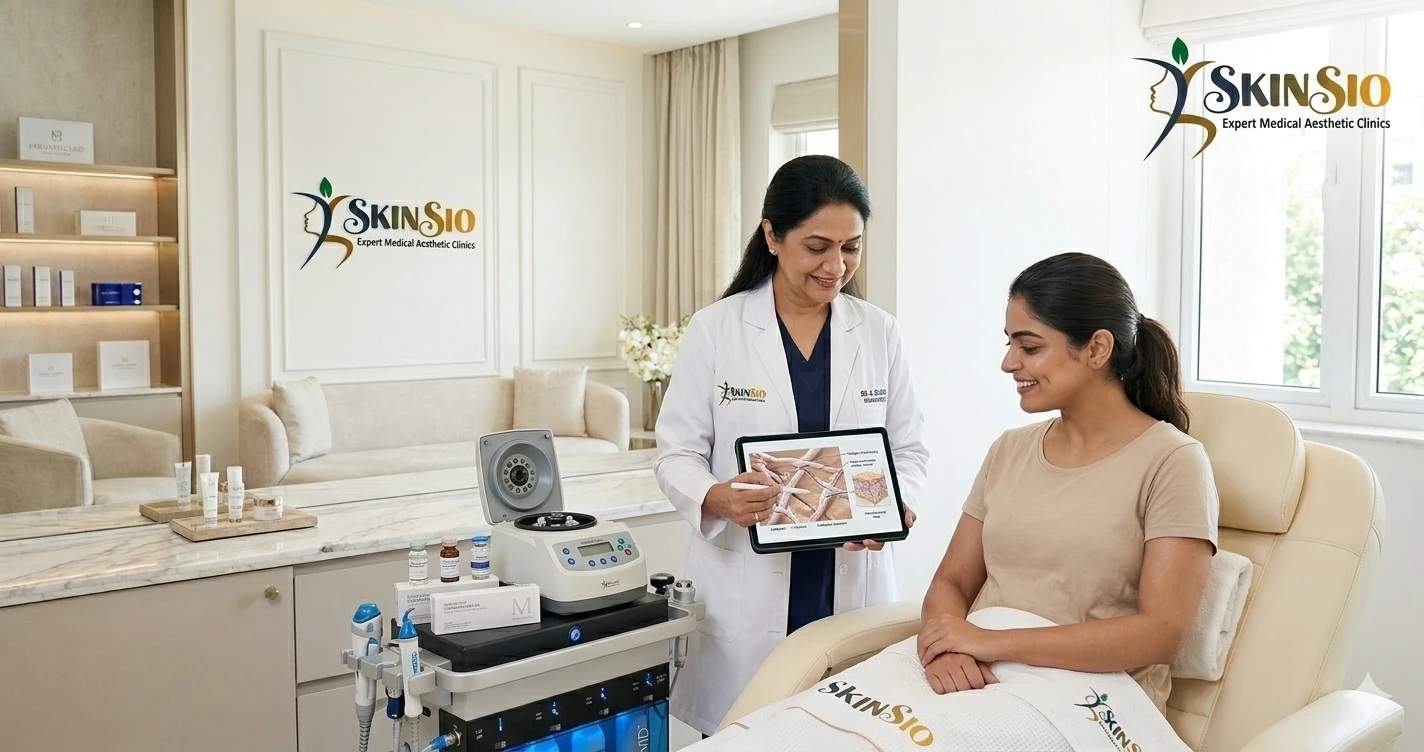
What Are Regenerative and Biostimulator Treatments?
Regenerative aesthetics is one of the fastest-growing areas in modern dermatology — and it works on a simple principle: instead of masking the signs of ageing, it asks your own body to repair and rebuild itself. Platelet-Rich Plasma (PRP) and Platelet-Rich Fibrin (PRF) are prepared from a small sample of your own blood, concentrating growth factors that are then re-injected to stimulate collagen production, tissue healing and hair regrowth.
Biostimulator treatments take a related but distinct approach. Injectables such as Sculptra (Poly-L-Lactic Acid, or PLLA) and Radiesse (Calcium Hydroxylapatite, or CaHA) are not simple volume fillers — they act as a scaffold under the skin that gradually triggers your body's own collagen-building response over several months, giving results that look natural and build slowly rather than appearing instantly "filled".
At SkinSio Clinics, Vadodara, these treatments are offered under full dermatologist supervision — from initial assessment through to injection and follow-up — combining global clinical protocols with care tailored for Indian skin.
Regenerative vs Biostimulator vs Traditional Fillers: How They Compare
Patients often ask how these newer treatments differ from a "regular" filler or Botox. Here is a simple comparison:
| Treatment Type | How It Works | Onset of Visible Result | Typical Duration |
|---|---|---|---|
| Hyaluronic Acid (HA) Filler | Adds immediate volume by physically filling space | Instant | 6–12 months |
| PRP / PRF | Uses your own growth factors to stimulate repair and new collagen | Gradual, over weeks | Several months, with maintenance |
| Sculptra (PLLA) | Scaffold stimulates new collagen deposition over time | Gradual, from ~8–12 weeks | Up to 2 years or longer |
| Radiesse (CaHA) | Immediate volume plus gradual collagen stimulation | Immediate, with continued improvement | Around 1–2 years |
In practice, these approaches are often complementary rather than competing — many patients at SkinSio Clinics combine an HA filler for immediate contouring with a biostimulator for long-term skin quality improvement.
What Conditions Can Be Treated?
PRP and PRF are most commonly used for:
- Overall facial skin rejuvenation — improving tone, texture and subtle radiance
- Acne scars, particularly when combined with microneedling
- Under-eye hollows and early signs of tired-looking skin
- Hair thinning and early androgenic alopecia, via scalp injections
- Post-procedure healing support after laser or microneedling sessions
Sculptra and Radiesse are typically used for:
- Diffuse volume loss in the cheeks and temples
- Jawline and chin contour support
- General improvement in skin firmness and quality over time
- Radiesse specifically is also used for hand rejuvenation
The best candidates for any of these treatments are patients with early-to-moderate signs of ageing or thinning who want a gradual, natural-looking improvement rather than a dramatic overnight change.
Procedure Overview: What to Expect
PRP/PRF Procedure — A small blood sample is drawn, similar to a routine blood test, and processed in a centrifuge to separate the platelet-rich fraction. Topical numbing cream is applied to the treatment area, and the prepared plasma or fibrin is then injected using fine needles into the scalp or face. The entire process typically takes 45–60 minutes.
Sculptra/Radiesse Procedure — After a consultation to map the treatment areas, the product is reconstituted (for Sculptra) and injected at precise depths using a needle or cannula. Sessions usually take 30–45 minutes, with results building gradually as collagen forms around the product over the following weeks and months.
Who Is a Good Candidate? Contraindications to Know
Most healthy adults seeking gradual, natural-looking rejuvenation are suitable candidates. However, these treatments are generally not recommended for:
- Pregnant or breastfeeding women
- Patients with active skin infection at the treatment site
- Those with bleeding or clotting disorders, or currently on certain blood-thinning medication (relevant mainly to PRP/PRF)
- Patients with known hypersensitivity to filler components or, where applicable, lidocaine
- Those with a history of keloid or hypertrophic scarring (a relative contraindication for biostimulators, to be discussed with your dermatologist)
A thorough medical history review at SkinSio Clinics, Vadodara is conducted before any regenerative or biostimulator treatment to confirm suitability.
Risks and Safety
These treatments have a strong safety record when performed by trained medical professionals under sterile conditions:
- PRP/PRF — Since the material is autologous (from your own blood), allergic reaction risk is minimal. Common side effects are mild injection-site pain, bruising, or transient swelling.
- Sculptra — Temporary swelling and bruising are common. Delayed, small nodules can occasionally appear months later and are manageable when identified early by an experienced dermatologist — this is one reason regular follow-up matters.
- Radiesse — Bruising and occasional firm nodules can occur. Very rarely, improper injection technique near blood vessels can cause more serious complications, which is why these injections should only ever be performed by a qualified physician.
Regulatory guidance in India is clear that injectable aesthetic procedures — including PRP, fillers and biostimulators — should be performed only by qualified medical practitioners. At SkinSio Clinics, every session is performed or directly supervised by our dermatology team.
Aftercare and Recovery
- Avoid touching, massaging or applying makeup to the treated area for the first 12–24 hours
- Avoid strenuous exercise, saunas and excessive sun exposure for 24–48 hours after treatment
- Mild swelling or bruising can be managed with a cold compress if advised by your doctor
- For Sculptra, gentle massage of the treated area as instructed by your dermatologist helps even product distribution
- Stay well hydrated and follow any specific instructions given at your SkinSio Clinics appointment
Results, Sessions and Cost in Vadodara
Treatment plans are always personalised, but here is a general guide to what most patients can expect:
| Treatment | Typical Sessions | Results Build Over | Approx. Cost (₹) |
|---|---|---|---|
| PRP / PRF (skin or hair) | 3–4 sessions, 3–6 weeks apart | 2–4 months | ₹4,000 – 9,000 per session |
| Microneedling + PRP combo | 3–4 sessions, 4–6 weeks apart | 3–6 months | Custom quote at consultation |
| Sculptra (PLLA) | 2–4 sessions, 4–8 weeks apart | 3–6+ months | ₹15,000 – 25,000 per vial |
| Radiesse (CaHA) | 1–2 sessions | Immediate, refining over 2–3 months | ₹15,000 – 25,000 per syringe |
Exact pricing depends on the treatment area, number of sessions and product quantity required, and is confirmed during your in-clinic consultation. Call or WhatsApp +91 93220 22392 for current rates.
Combining Regenerative Treatments with Your Existing Skincare Routine
Regenerative and biostimulator treatments work well as part of a broader skincare plan rather than in isolation. PRP is frequently layered with microneedling for acne scar remodelling — read our detailed guide on acne treatment in Vadodara to see how this fits into a complete protocol. Patients often pair a PRP or biostimulator course with a HydraFacial Advanced session for an added glow between visits, or with our laser photo facial for patients also addressing pigmentation. For patients exploring hair thinning specifically, PRP scalp therapy is one of our most requested non-surgical hair restoration options. Brides planning ahead often add a PRP series into their bridal skincare timeline for extra glow by the wedding day.
Why Choose SkinSio Clinics for Regenerative Aesthetics in Vadodara
At SkinSio Clinics, Vadodara, regenerative and biostimulator treatments are performed under full dermatologist supervision, using sterile single-use kits for blood processing and globally recognised injectable brands. Every patient receives a detailed consultation, transparent pricing, and a realistic timeline before starting treatment — because these are gradual, evidence-based therapies, not overnight fixes. We have treated thousands of patients across skin, hair and aesthetic concerns in Vadodara, and our team stays current with the latest published clinical evidence on PRP, PRF, PLLA and CaHA therapies from India and internationally.
Conclusion
Regenerative aesthetics and biostimulator treatments represent a meaningful shift in cosmetic dermatology — away from temporary camouflage and toward genuine, gradual tissue rebuilding using either your own biology (PRP/PRF) or scientifically engineered collagen stimulators (Sculptra, Radiesse). Both approaches are backed by a growing body of clinical evidence and offer a safe, natural-looking path to rejuvenation when performed by qualified medical professionals. Whether your goal is improving skin quality, restoring lost facial volume, or addressing hair thinning, a personalised consultation at SkinSio Clinics, Vadodara will help determine which regenerative approach — or combination of approaches — is right for you.
Frequently Asked Questions
What is regenerative aesthetics?
Regenerative aesthetics uses the body's own biology — most commonly Platelet-Rich Plasma (PRP) or Platelet-Rich Fibrin (PRF) drawn from your own blood — to trigger natural collagen production, tissue repair and hair regrowth, rather than masking signs of ageing with temporary fillers.
What is a biostimulator and how is it different from a regular filler?
A biostimulator, such as Sculptra (Poly-L-Lactic Acid) or Radiesse (Calcium Hydroxylapatite), does not just sit under the skin to add bulk like a hyaluronic acid filler. It acts as a scaffold that gradually triggers your own collagen production over several months, giving a more natural, longer-lasting result.
What is the difference between PRP and PRF?
Both are prepared from your own blood by centrifuging out the platelet-rich layer. PRF is a newer, fibrin-rich preparation that releases growth factors more slowly than PRP, potentially extending the regenerative effect. PRP has a longer track record of clinical evidence, particularly for hair restoration and skin rejuvenation.
What is the difference between Sculptra and Radiesse?
Sculptra (PLLA) works purely through gradual collagen stimulation with no immediate volumising effect — results build over 2–3 months. Radiesse (CaHA) provides some immediate volume on injection plus a collagen-stimulating effect that develops over the following months. The choice depends on the area treated and whether immediate correction is desired.
What can PRP and PRF treat?
PRP/PRF is commonly used for facial skin rejuvenation, acne scar improvement (often combined with microneedling), under-eye hollows, and hair restoration in androgenic alopecia or early hair thinning. It is also used as a healing booster after certain laser or microneedling procedures.
What can Sculptra and Radiesse treat?
These biostimulator fillers are mainly used for diffuse facial volume loss — sunken cheeks, temple hollowing, jawline and chin laxity — and to improve skin quality and firmness over time. Radiesse is also commonly used on the hands and jawline contour.
How many sessions are needed?
PRP/PRF for skin or hair is usually given as a course of 3–4 sessions spaced 3–6 weeks apart, with maintenance every 6–12 months. Sculptra typically requires 2–4 sessions spaced 4–8 weeks apart. Radiesse often needs only 1–2 sessions per area. Your SkinSio Clinics dermatologist will personalise this based on your goals.
How long do results last?
PRP/PRF results for skin and hair typically last several months to a year with maintenance sessions. Sculptra results have been shown to last up to 2 years or longer in clinical follow-up, while Radiesse results commonly last around 1–2 years, depending on the treated area and individual metabolism.
Is PRP/PRF treatment painful?
Discomfort is generally mild. A small blood draw is required (similar to a routine blood test), followed by injections using fine needles. Topical numbing cream is applied beforehand at SkinSio Clinics to keep the procedure comfortable.
Are Sculptra and Radiesse safe?
Yes, both are well-studied, biocompatible injectables used worldwide. Common side effects are temporary swelling, bruising or redness at the injection site. Rare delayed nodules can occur with Sculptra and are managed easily when identified early by a trained dermatologist — which is why these treatments should only be performed by qualified medical professionals.
Who should avoid regenerative or biostimulator treatments?
These treatments are generally avoided in pregnancy and breastfeeding, active skin infection at the treatment site, blood clotting disorders or use of certain blood thinners (for PRP/PRF), and known hypersensitivity to filler components. A detailed medical history review at SkinSio Clinics determines suitability for each patient.
How much do these treatments cost in Vadodara?
Costs vary by treatment, area and number of sessions required. As a general guide in India, PRP/PRF sessions typically range from ₹4,000–9,000 per session, while biostimulator fillers such as Sculptra and Radiesse are priced per vial or syringe, generally in the ₹15,000–25,000 range. SkinSio Clinics provides a personalised quote after your consultation. Call +91 93220 22392 for current rates.
Can regenerative treatments be combined with other procedures?
Yes. PRP/PRF is frequently combined with microneedling for acne scars, or layered with a HydraFacial for an added glow boost before an event. Biostimulators like Sculptra are sometimes paired with hyaluronic acid filler for patients who want both immediate contouring and long-term collagen rebuilding. Your dermatologist at SkinSio Clinics will recommend the right combination for your goals.
Why should these treatments only be done at a qualified medical clinic?
PRP/PRF involves handling and re-injecting a patient's own blood products, and biostimulator fillers require precise placement to avoid complications such as vascular occlusion or lumps. Regulatory guidance in India requires injectable aesthetic procedures to be performed only by qualified physicians under sterile medical conditions — which is the standard followed at SkinSio Clinics.