
PPET Treatment in Vadodara: What Is Everyone Suddenly Asking About?
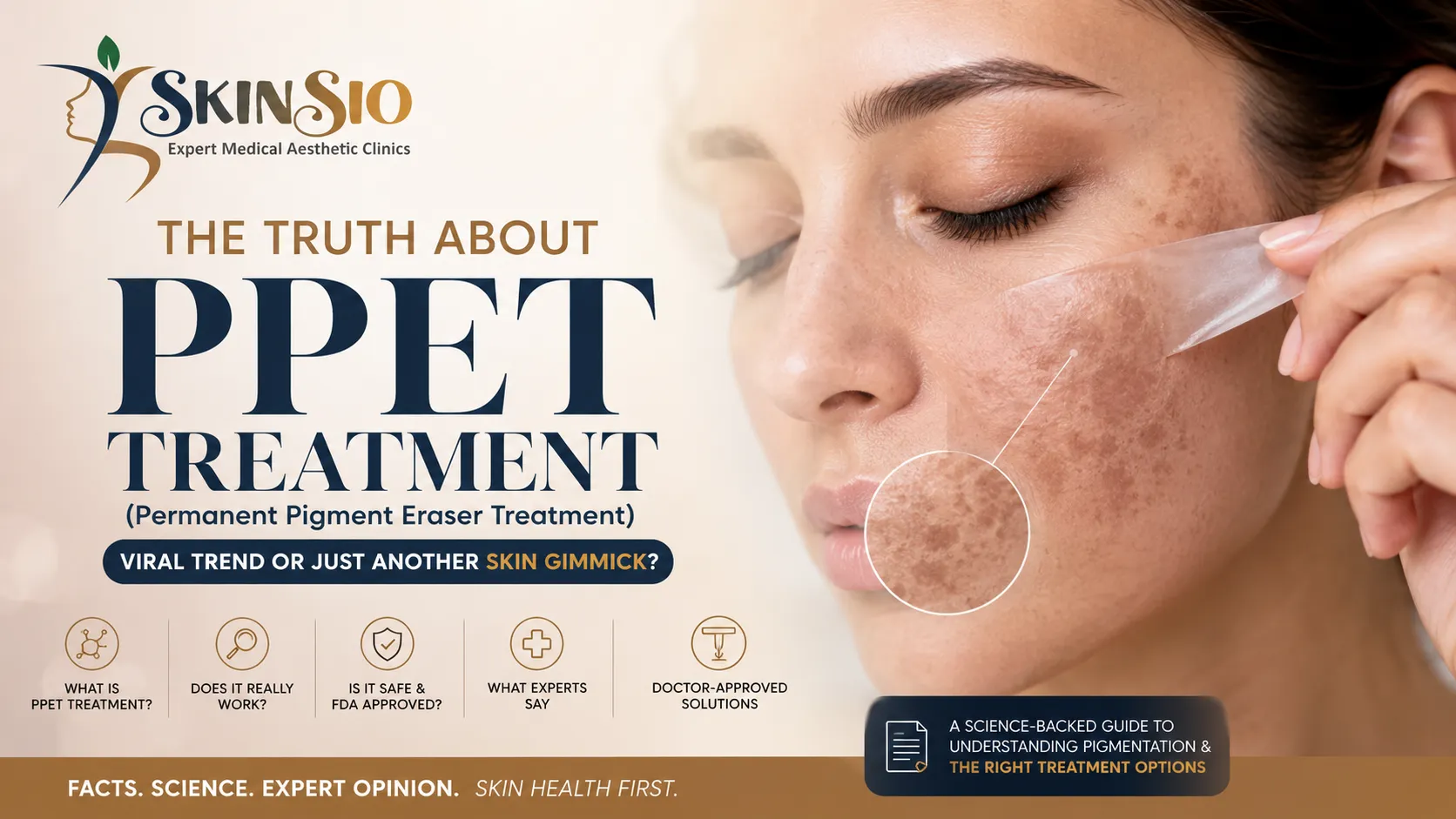
Over the past few months, a growing number of patients walking into SkinSio Clinics, Vadodara have asked the same question: "Have you heard of PPET? Can you do it here?" The trend — short for "Permanent Pigment Eraser Treatment" — has spread globally through Instagram Reels and TikTok, and Vadodara is no exception. The videos are simple and satisfying: a strip of silicone tape is pressed onto a dark spot or patch of melasma, left in place for several days, then peeled away in one dramatic motion to reveal supposedly brighter, pigment-free skin underneath.
It looks convincing on a phone screen. It is not convincing to a dermatologist. This article breaks down exactly why PPET does not — and cannot — do what it claims, what silicone tape is actually approved for, the real risks of trying this at home, and what genuinely works for pigmentation and melasma, whether you're in Vadodara or anywhere else searching for answers.
What Is PPET, Exactly?
PPET is not a recognised dermatological procedure, a registered device, or a drug approved by any regulatory body — not India's CDSCO, not the US FDA, not any national health authority. It is a name given by social media creators to a simple at-home hack: apply an adhesive silicone patch over a pigmented area, leave it on for a few days to a week, then peel it off. Some versions add pressure, occlusive wrapping, or repeated cycles of application.
The marketing language around PPET — "permanent," "eraser" — is doing a lot of work it cannot back up. No topical adhesive, regardless of how it's marketed, can permanently remove pigment that lives inside skin cells. That claim alone should be a red flag for anyone evaluating it, and it is the first thing dermatologists point to when the trend comes up.
Is "Pigmentation Eraser Treatment" Offered in Vadodara?
A growing number of Vadodara residents are searching for "pigmentation eraser treatment vadodara" or "PPET treatment vadodara near me," often after seeing the trend on Instagram or hearing about it from a friend. To be direct: no licensed dermatology clinic in Vadodara — including SkinSio Clinics — offers PPET as a treatment, because it is not a recognised medical procedure. If a salon or clinic in Vadodara is marketing a "pigmentation eraser" service using silicone tape or a similar peel-off patch, it is using viral branding, not an approved dermatological technique. Patients researching this locally are better served asking any clinic directly what active mechanism the treatment uses on melanin — a question PPET providers cannot meaningfully answer.
The Real Science: Why Pigment Can't Be Peeled Off
To understand why PPET fails, it helps to understand where pigment actually lives. Melasma and most forms of hyperpigmentation — including post-acne marks and sun spots — are caused by melanocytes, the pigment-producing cells in your skin, releasing excess melanin into the surrounding tissue. This happens in the epidermis (the living layers beneath the surface) and, in many cases, deeper still in the dermis.
Dermatology commonly separates melasma into two patterns based on depth:
| Type | Appearance | Depth | Response to Treatment |
|---|---|---|---|
| Epidermal melasma | Brown, well-defined borders | Upper living skin layer | Responds reasonably well to proper treatment |
| Dermal melasma | Bluish-grey, blurred borders | Deeper skin layer | Notoriously difficult to treat even with medical therapy |
Even the epidermal type — the more "surface" of the two — sits within living tissue, not on top of it. The only truly superficial layer of skin is the stratum corneum: a sheet of dead, flattened cells that are constantly shedding and regenerating anyway. A sticky patch can lift some of these dead cells away. It cannot reach into living epidermis or dermis, and it has no mechanism to disable a melanocyte or extract melanin. In short: pigment does not sit on the surface of your skin, so nothing that only touches the surface can remove it.
So Why Do the "Reveal" Videos Look So Convincing?
Three things are happening in a typical PPET video, none of which involve pigment removal:
- Dead cell removal — the adhesive lifts flakes of stratum corneum, which can make the area look temporarily smoother or slightly lighter under camera lighting
- Temporary hydration and swelling — days of occlusion trap moisture under the tape, plumping the skin slightly and softening its texture, which reads as "improvement" on camera
- Selective posting — viral trends survive on their best-looking examples; videos where nothing changed, or where the skin reacted badly, rarely go viral in the same way
None of these effects touch the actual pigment-producing cells. Once the temporary surface smoothing and hydration fade — typically within days — the underlying dark patch is exactly where it was before.
Silicone Tape Has a Real Medical Use — Just Not This One
It's worth being fair to the material itself: silicone sheeting is a legitimate, well-studied tool in dermatology. It is considered a first-line treatment for scar management, particularly for hypertrophic and keloid scars. It works by forming an occlusive film that hydrates healing tissue, protects it from friction and UV exposure, and supports more organised collagen remodelling — which can flatten and soften raised scars, and help prevent scar tissue from darkening in the sun.
What silicone sheeting does not contain is any active ingredient that targets melanin or melanocytes. Its entire mechanism is hydration and physical protection of already-healing tissue — a completely different job from breaking down pigment in otherwise healthy skin. Regulatory classifications for silicone sheeting reflect exactly this: it is categorised as a scar-management product, never as a pigmentation or whitening treatment.
Cautions: Why Trying PPET Can Backfire
Beyond simply "not working," PPET carries real risks — something that matters even more for Indian skin tones (Fitzpatrick III–V), which are more prone to reactive pigmentation than lighter skin types.
- Irritation and contact dermatitis — leaving adhesive on sensitive facial skin for days at a time commonly causes redness, itching, and rash, especially in Vadodara's heat and humidity
- Post-inflammatory hyperpigmentation (PIH) — physically stripping or irritating the skin barrier is a known trigger for the skin to produce more melanin as a stress response, which can leave the treated spot darker than before
- Clogged pores and breakouts — prolonged occlusion over facial skin can trap oil and bacteria, leading to new acne in the treated area
- Allergic reactions — adhesive and silicone sensitivities, while uncommon, can cause more significant skin reactions with repeated use
- Delayed proper treatment — perhaps the biggest hidden cost: time spent on a hack that cannot work is time melasma or pigmentation continues untreated, and in some cases can worsen with ongoing sun exposure
One consistent message across dermatology commentary on this trend is blunt: repeated tape-and-peel cycles can ultimately damage the skin barrier and provoke more pigment, not less — the opposite of the intended effect.
What Actually Treats Pigmentation and Melasma
The disappointing truth about pigmentation is also the useful one: there is no single overnight fix, viral or otherwise — but there are several genuinely effective, evidence-based approaches, usually combined for the best result.
| Approach | How It Helps |
|---|---|
| Daily broad-spectrum sunscreen | The single most important step — UV exposure actively stimulates melanin and undoes other treatments |
| Prescription topicals | Hydroquinone, tretinoin, azelaic acid, kojic acid, and tranexamic acid target melanin production directly |
| Chemical peels | Glycolic, salicylic, or TCA peels accelerate turnover of pigmented surface cells |
| Laser and light therapy | Q-switched or fractional lasers, calibrated for Indian skin, target stubborn pigment more precisely |
| Microneedling | Remodels skin texture and improves topical absorption when combined with brightening actives |
There is no universal "best" treatment — as major dermatology bodies note, melasma in particular typically needs a personalised combination of sun protection, topicals, and in-clinic procedures, adjusted over time as the skin responds. At SkinSio Clinics, Vadodara, this always starts with an in-person diagnosis to confirm whether pigmentation is epidermal, dermal, or a mix — since that distinction genuinely changes which treatment will work.
If You've Already Tried PPET
If you've tried the tape trend and your skin looks fine, no harm done — but understand that any brightening you saw was temporary surface smoothing, not pigment removal. If your skin is irritated, red, or itchy, stop applying the tape immediately, avoid picking or peeling further, keep the area clean with a gentle cleanser, moisturise, and apply sunscreen if it's an exposed area. Persistent redness, a rash, or new dark marks are a reason to see a dermatologist rather than wait it out or try another home remedy on top of it.
Why Viral Trends Keep Outrunning Dermatology — and Why That's a Problem
PPET is not the first skincare trend to promise a dramatic result from a simple household trick, and it won't be the last. What makes it worth writing about specifically is the word "permanent" in its name — a claim that should trigger scepticism on its own, since no legitimate dermatological treatment for pigmentation, from prescription creams to lasers, promises a permanent, one-time fix. Real treatment for melasma and hyperpigmentation is a managed process: it requires diagnosis, consistency, sun protection, and often patience over months — not a five-day patch.
If a claim sounds too fast, too easy, and too final to match what medicine can currently do, that mismatch is the clearest signal that it's marketing, not medicine.
Why SkinSio Clinics for Pigmentation Care in Vadodara
At SkinSio Clinics, Vadodara, every pigmentation consultation starts with an honest, evidence-based assessment — not a trend. Our doctors evaluate whether a patch is epidermal or dermal melasma, sun damage, or post-acne marks, and build a plan around your specific skin type and lifestyle. We combine Pigmentation Treatment, Laser Photo Facial, and HydraFacial Advanced where appropriate, and we're always transparent about what a treatment can and cannot realistically achieve. If you've been considering a viral hack, our detailed guide on pigmentation and skin ageing in Vadodara explains what's actually driving dark spots in this climate, and our acne scar treatment guide covers evidence-based options for post-acne marks specifically.
Conclusion
PPET is a compelling video, not a treatment. Silicone tape has a genuine, well-earned place in scar care, but it has no mechanism to reach or remove melanin sitting in living skin. Trying it risks irritation, breakouts, and even darker post-inflammatory marks — while the real pigmentation underneath goes untreated. If dark spots or melasma are bothering you, the fastest and safest route to real improvement is a proper diagnosis and an evidence-based plan, not a peel-off patch borrowed from a social media trend.
Frequently Asked Questions
What is PPET and where did it come from?
PPET ("Permanent Pigment Eraser Treatment") is a viral social media trend where a silicone tape or patch is stuck over a dark spot and peeled off days later, supposedly taking the pigment with it. It spread rapidly on Instagram Reels and TikTok as a DIY alternative to professional pigmentation treatment, but no dermatology body or regulatory agency recognises it as a real medical treatment.
Does PPET actually remove pigmentation or melasma?
No. Melasma and most hyperpigmentation form from melanin deposited inside living skin cells in the epidermis and dermis — layers that sit beneath the outer dead-skin surface. A sticky patch can only lift loose, dead surface cells; it has no way to reach or remove the melanin-producing cells underneath, so the pigment simply remains.
Why do the PPET "peel reveal" videos look so convincing?
The satisfying peel usually removes a thin layer of dead skin, dried debris, or superficial flakes stuck to the tape's adhesive. This can make skin look temporarily smoother or slightly brighter under video lighting, creating the illusion of pigment removal — but the effect is cosmetic and short-lived, not a change in the melanin below.
Is silicone tape used in real dermatology at all?
Yes — silicone sheeting is a genuine, first-line treatment, but for scar management, not pigmentation. It hydrates healing scar tissue, protects it from friction and sun, and can help soften and flatten hypertrophic or keloid scars over months of consistent use. It has no established role in treating melasma or dark spots.
Can trying PPET damage my skin?
Yes, it can. Repeatedly applying and peeling adhesive tape on facial skin can cause irritation, contact dermatitis, clogged pores and breakouts, and — particularly on Indian skin tones — can trigger post-inflammatory hyperpigmentation, which is often darker and more stubborn than the original spot.
What actually works for melasma and dark spots?
Evidence-based options include daily broad-spectrum sunscreen, prescription topicals (hydroquinone, tretinoin, azelaic acid, tranexamic acid), medical-grade chemical peels, Q-switched or fractional lasers, and microneedling — usually combined into a personalised plan by a dermatologist, since melasma in particular often needs a tailored, multi-modality approach.
Should I stop a viral trend I've already tried if my skin is irritated?
Yes. Stop applying the tape immediately, avoid further peeling, keep the area clean and gently moisturised, and apply sunscreen if the area is exposed. If you see persistent redness, itching, or a rash, book a consultation — early treatment prevents a temporary irritation from becoming lasting post-inflammatory pigmentation.
Is PPET available or offered at SkinSio Clinics?
No. SkinSio Clinics, Vadodara does not offer PPET because it has no medical evidence behind it. We treat pigmentation and melasma using dermatologist-supervised, evidence-based protocols — sunscreen counselling, prescription topicals, chemical peels, laser therapy, and combination regimens tailored to each patient's skin type and diagnosis.