
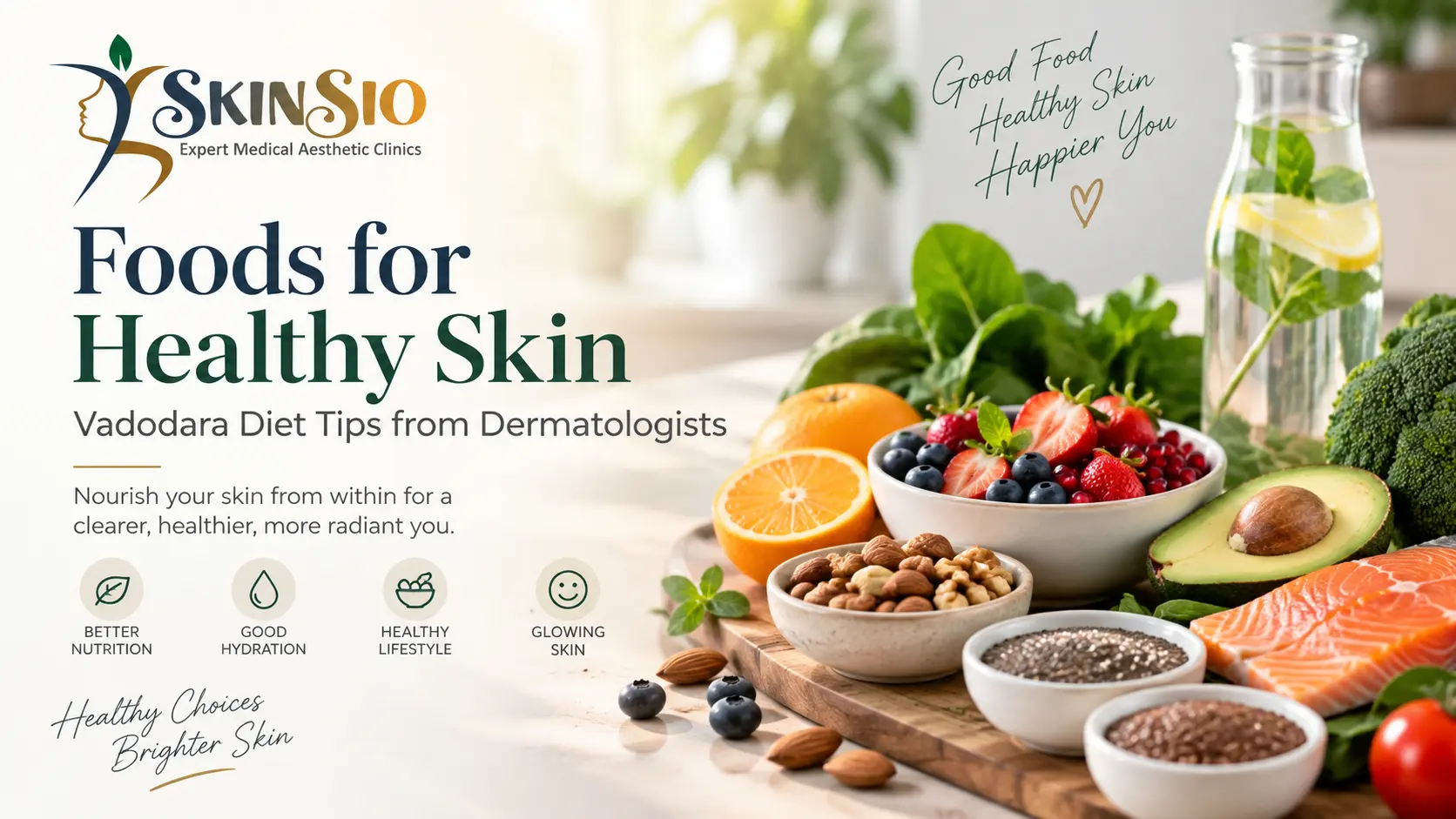
Good skin doesn't begin and end with a face wash, serum or in-clinic treatment. What you eat, how well you hydrate, your sleep, stress levels, sun exposure and overall lifestyle can all influence how your skin looks and functions over time.
That doesn't mean there is a magical "glow food" that transforms skin overnight. Instead, healthy-looking skin is supported by a balanced, nutrient-rich diet followed consistently over time — alongside proper skincare, sun protection and appropriate dermatological treatment when needed.
For people living in Vadodara, busy schedules, frequent eating outside, sugary drinks, highly processed snacks and inadequate water intake — especially through the city's hot summer months — can sometimes make maintaining a balanced routine difficult. At SkinSio Clinics, Vadodara, we're often asked what to actually eat for healthier skin. This guide breaks that down, and is equally clear about where diet's role ends and proper dermatological care begins.
Can Your Diet Really Affect Your Skin?
Yes — but probably not in the way social media makes it sound. Your skin requires adequate protein, essential fatty acids, vitamins, minerals and water to maintain its normal structure and function. Some dietary patterns may also influence conditions such as acne in susceptible individuals.
However, food is not a replacement for appropriate dermatological treatment. For example, someone with moderate-to-severe acne shouldn't rely on dietary changes alone when medical treatment is indicated — a point we cover in detail in our acne treatment guide. Think of nutrition as one part of your overall skin-health strategy: healthy diet + appropriate skincare + sun protection + adequate sleep + medical treatment when needed.
8 Nutrients That Support Healthy Skin
1. Vitamin C
Vitamin C is an antioxidant and is involved in collagen formation. Good dietary sources include guava, amla, oranges, mosambi, kiwi, strawberries, capsicum and tomatoes. Amla or guava can be an easy Indian addition to your diet without relying on supplements. Remember: eating vitamin-C-rich foods is different from applying vitamin C directly to the skin — topical vitamin C products work differently and may be recommended for specific skin concerns.
2. Vitamin E
Vitamin E contributes to antioxidant protection. Food sources include almonds, sunflower seeds, peanuts, hazelnuts, other seeds and avocado. A small serving of nuts or seeds can be incorporated into a balanced diet — you don't need large quantities.
3. Omega-3 Fatty Acids
Omega-3 fatty acids are essential fats involved in several functions throughout the body. Vegetarian sources include flaxseeds, chia seeds, walnuts and certain fortified foods. Non-vegetarian sources include fatty fish such as salmon and sardines. If you don't eat fish, plant-based sources can still be incorporated into your diet, although the specific omega-3 forms and their conversion in the body differ.
4. Protein
Healthy skin, hair and nails require adequate protein. Useful sources include dal, beans, chickpeas, paneer, curd, eggs, fish, chicken, tofu and soy products. A diet focused only on fruits and juices isn't a complete "skin diet" — protein matters too.
5. Zinc
Zinc is an essential mineral involved in numerous biological processes, including normal skin function and wound healing. Dietary sources include pumpkin seeds, sesame seeds, legumes, nuts, whole grains, dairy, meat and seafood. If you have acne, don't automatically start taking high-dose zinc supplements — more isn't necessarily better, and excess zinc supplementation can itself cause side effects.
6. Antioxidant-Rich Foods
Your diet can include a variety of colourful fruits and vegetables containing antioxidant compounds — think green, red, orange, yellow and purple. Examples include spinach, carrots, tomatoes, bell peppers, berries, pomegranate, papaya, citrus fruits and leafy vegetables. Instead of searching for one "superfood," aim for variety.
7. Fibre
A fibre-rich diet supports overall digestive health and helps make meals more filling. Good options include vegetables, fruits, whole grains, oats, dal, beans, chickpeas and seeds. Whole foods are generally a better foundation than relying on powders, juices or "detox" products.
8. Water
This may be the least glamorous skin-care tip — but it's one of the simplest. Dehydration can affect overall health and may make skin appear less comfortable or hydrated. Instead of waiting until you're extremely thirsty, maintain regular fluid intake throughout the day. Your exact water requirement depends on body size, activity, climate and medical conditions. In Vadodara's warmer months, people who sweat heavily or spend significant time outdoors may need more fluids.
What About "Foods for Glowing Skin"?
There isn't one food that guarantees glowing skin. Instead, think about your overall dietary pattern. A skin-friendly plate could contain roughly half vegetables and salad, a quarter protein, and a quarter whole grains or another carbohydrate source — plus fruit, adequate fluids and healthy fats as appropriate. That is considerably more useful than searching for a single miracle ingredient.
A Simple Skin-Friendly Indian Diet Plan
Here's an example — not a prescription or a weight-loss plan.
Morning: Water plus a balanced breakfast such as vegetable poha, upma with vegetables, oats, eggs with whole-grain toast, idli with sambar, or besan chilla. Add fruit where appropriate.
Mid-morning: Choose one — guava, amla, orange, papaya, apple, or seasonal fruit.
Lunch: A practical plate could include dal, beans, paneer or another protein source; vegetables; roti or rice; curd; and salad.
Evening snack: Instead of biscuits, fried snacks or sugary drinks, consider roasted chana, fruit, unsweetened or lightly sweetened curd, nuts in moderate portion, or sprouts.
Dinner: Keep it balanced and comfortable — vegetables, dal or another protein source, roti/rice or another carbohydrate, and salad where appropriate.
The goal isn't to eat "perfectly." Consistency matters more than perfection.
What About Fried Foods and Acne?
This is where things become more nuanced. It would be inaccurate to say "eating fried food causes acne." Acne is influenced by multiple factors, including hormones, sebum production, follicular blockage and inflammation. However, overall dietary patterns may influence acne in some people, and diets high in highly processed foods or certain high-glycaemic foods may be associated with acne in some studies.
So instead of banning every food you enjoy, try improving the overall pattern. Reduce reliance on highly processed snacks, sugary beverages, excessive refined carbohydrates and frequent deep-fried foods. Increase vegetables, whole foods, protein, fruits, fibre and adequate fluids. If you have persistent acne, nutrition should complement — not replace — appropriate acne treatment. Our teenage acne treatment guide covers this diet-and-medicine balance in more detail for younger patients specifically.
Do You Need Supplements for Better Skin?
Not necessarily. If your diet is balanced and you don't have a nutritional deficiency, taking multiple supplements simply because they are marketed for "skin, hair and nails" may not provide additional benefit. Supplements can be appropriate in specific situations, such as a diagnosed deficiency or a medically indicated requirement. That's why it's better to discuss supplementation with a qualified healthcare professional rather than taking high doses of vitamins or minerals independently. More supplements does not equal healthier skin.
What About Collagen Supplements?
Collagen supplements are widely marketed for skin ageing and elasticity. Some research suggests that certain oral collagen products may provide modest improvements in skin hydration or elasticity, but they are not magic solutions and product quality varies considerably. A balanced diet that provides adequate protein and essential nutrients remains fundamental. And don't forget the biggest evidence-based anti-ageing habit: sun protection — something we cover in depth in our pigmentation and skin ageing guide.
What About IV Vitamin or Glutathione Treatments?
IV therapies are sometimes marketed for skin brightening, antioxidant support or general wellness. But they should not be considered a substitute for a healthy diet. If you're considering an IV therapy, the decision should be based on appropriate medical assessment, your health status, and a clear understanding of potential benefits and risks. Our glutathione IV therapy guide covers what this treatment can and cannot realistically achieve. At SkinSio Clinics, patients can discuss aesthetic and skin-health concerns with the clinical team before deciding whether any treatment is appropriate.
5 Everyday Habits That May Be More Important Than a "Glow Diet"
1. Wear sunscreen. UV exposure is a major contributor to tanning, pigmentation and photoageing — particularly relevant given Vadodara's near-constant sun exposure.
2. Sleep adequately. Poor sleep can affect overall health and may show on your skin.
3. Don't smoke. Smoking is associated with premature skin ageing and several other health risks.
4. Exercise regularly. Regular physical activity supports overall health and circulation.
5. Don't keep changing skincare products. A complicated routine isn't necessarily a better routine.
Your Skin May Need More Than Diet
Nutrition can support healthy skin, but persistent skin concerns may require proper diagnosis. Persistent acne may require medical treatment, chemical peels or other selected procedures. Pigmentation's cause should be identified before choosing a treatment — see our complete pigmentation treatment guide. Acne scars usually require a different strategy from active acne, covered in our acne scar treatment guide. Hair loss may require assessment to identify the underlying cause, as detailed in our hair fall treatment guide. Premature ageing is best addressed with sun protection and skincare as the foundation, while selected aesthetic treatments may be considered when appropriate.
If you're dealing with a persistent skin concern, changing your diet repeatedly may delay the treatment you actually need.
The SkinSio Approach to Healthy Skin
At SkinSio Clinics, we believe healthy-looking skin isn't created by one food, one facial or one skincare product. It comes from understanding the individual's skin, identifying the underlying concern, and creating an appropriate plan — which may involve skincare, sun protection, lifestyle modification, medical treatment, clinical procedures when appropriate, and long-term maintenance.
If you're in Vadodara and struggling with acne, pigmentation, dullness, premature ageing, hair loss or another persistent concern, a professional skin assessment can help determine what your skin actually needs — the same diagnosis-first approach we detail in our guide to choosing a skin clinic in Vadodara.
Final Takeaway: Eat for Your Overall Health, Not Just Your Skin
You don't need an expensive "glow diet." You don't need to eliminate every food you enjoy. And you don't need a cupboard full of supplements. Instead: eat a varied diet, include plenty of vegetables and fruits, get adequate protein, choose healthy sources of fats, stay appropriately hydrated, limit highly processed foods and excessive sugary drinks, protect your skin from the sun, and seek professional advice when a skin problem persists.
Because healthy skin isn't built overnight. It's supported by the small, consistent choices you make every day.
Looking for Skin & Hair Care in Vadodara?
SkinSio Clinics provides doctor-led skin, hair, laser and aesthetic care in Manjalpur, Vadodara. If you're concerned about acne, pigmentation, hair loss, premature ageing or another skin problem, speak with our clinical team to understand the most appropriate approach for your skin. Call or WhatsApp +91 93220 22392, or visit us at A/203, The Atlantic, Makarpura Road, Manjalpur, Vadodara to book a consultation.
Frequently Asked Questions
What are the best foods for healthy skin?
There isn't one best food. A balanced diet containing vegetables, fruits, adequate protein, healthy fats, whole grains and sufficient fluids is a better approach than focusing on a single "superfood." Variety and consistency matter more than any one ingredient.
Which fruits are good for skin?
Fruits such as guava, amla, oranges, papaya, berries and other seasonal fruits provide vitamins, minerals, fibre and antioxidant compounds that support overall nutrition, which in turn supports skin health.
What should I eat for glowing skin?
Focus on a balanced diet rather than a specific glow-food plan. Include colourful vegetables, fruits, protein, healthy fats and adequate fluids, alongside proper skincare, sun protection and adequate sleep.
Can food cause acne?
Diet is only one potential influence on acne. Some dietary patterns — particularly high-glycaemic and heavily processed foods — may worsen acne in susceptible individuals, but acne is multifactorial and isn't simply caused by eating one particular food.
Does drinking more water clear acne?
Adequate hydration is important for general health, but drinking excessive amounts of water does not cure acne. Persistent acne should be assessed and treated by a dermatologist rather than managed through hydration alone.
Should I take vitamin supplements for better skin?
Not routinely. Supplements are most useful when there is a specific nutritional deficiency or medical indication, ideally confirmed through blood tests. Taking multiple supplements without a diagnosed need rarely provides additional benefit.
Are fried foods bad for skin?
Occasional fried food does not automatically cause skin problems. However, a diet heavily dependent on highly processed and fried foods is generally less desirable than a varied, nutrient-rich diet, and some studies associate high-glycaemic diets with worsened acne in some people.
Is diet enough to treat acne, pigmentation or ageing skin?
No. Diet can support overall skin health, but persistent acne, pigmentation, scarring or premature ageing usually need proper dermatological evaluation and treatment. Nutrition should complement — not replace — appropriate medical care.